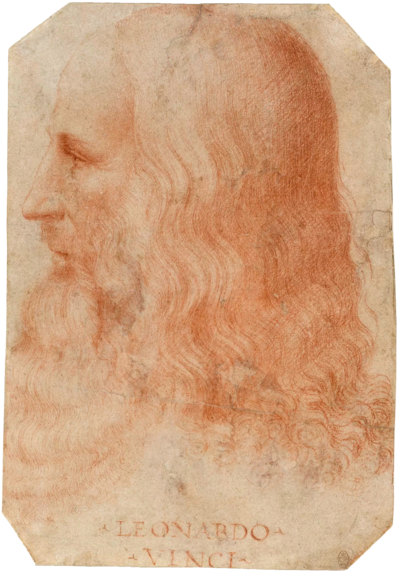
Leonardo da Vinci
Renaissance polymath whose engineering and art shaped economic patronage and innovation.
Who was Leonardo da Vinci?
Leonardo da Vinci, an Italian polymath, was an artist, engineer, and scientist whose work reflected and influenced the economic dynamics of the Renaissance. His diverse talents secured significant patronage, driving innovation in both art production and military technology.
“Simplicity is the ultimate sophistication.”
— Leonardo da Vinci, Various interpretations, often attributed to his design philosophy
Leonardo da Vinci, born in 1452, exemplifies the Renaissance ideal, making significant contributions across numerous fields. His artistic output, including works like the *Mona Lisa* (c. 1503-1519) and *The Last Supper* (1495-1498), generated substantial commissions and intellectual capital for patrons like Ludovico Sforza, Duke of Milan, from 1482 to 1499. These high-value artworks were not merely aesthetic objects but served as symbols of wealth, power, and cultural sophistication, driving an active market for luxury goods and skilled labor during the era.
Beyond art, Leonardo's engineering designs showcased a visionary understanding of mechanics, relevant for military applications and urban infrastructure. His extensive notebooks, containing over 13,000 pages of drawings and notes, detail prototypes for flying machines, hydraulic systems, and sophisticated weaponry like improved siege engines and armored vehicles, designed during his service to various Italian city-states. While many of these remained conceptual, they illustrate an early form of industrial design thinking, addressing practical challenges with inventive solutions that, if realized, would have offered substantial economic and strategic advantages to his employers.
Leonardo’s anatomical studies, conducted through some 30 human dissections around 1508-1513, laid foundations for medical illustration and understanding, indirectly contributing to the professionalization of medicine. Although his direct economic impact through realized inventions was limited, his conceptual work provided intellectual capital that later generations would draw upon. The meticulous observation and detailed recording practices evident in his scientific studies fostered an intellectual environment that valued precision, a quality that would become increasingly important for the efficiency gains sought by mercantilist economies.
His career itself reflects the economic structure of Renaissance Italy, where skilled individuals like Leonardo were highly mobile assets, moving between powerful patrons such as the Sforza family in Milan and Cesare Borgia in Florence. These patrons invested heavily in talent, both for prestige and for practical advancements in areas like defense and urban planning, influencing a broader economic ecosystem that supported guilds, workshops, and intellectual exchange.
Key Contributions
- Created *Mona Lisa* (c. 1503-1519) and *The Last Supper* (1495-1498), demonstrating high-value artistic production and patronage in the Renaissance.
- Designed numerous advanced engineering concepts for military and civil applications (e.g., flying machines, hydraulic systems) from 1480s to 1510s, reflecting early industrial design thinking.
- Conducted extensive anatomical studies (c. 1508-1513), advancing medical understanding and illustration techniques.
- Developed innovative techniques for painting and drawing, increasing the efficiency and quality of art production.
Legacy
Leonardo's work underscored the economic value of skilled intellectual labor and artistic patronage during the Renaissance. His visionary engineering designs, though often unrealized, provided intellectual capital that anticipated future industrial and technological advancements, influencing the long-term trajectory of innovation.