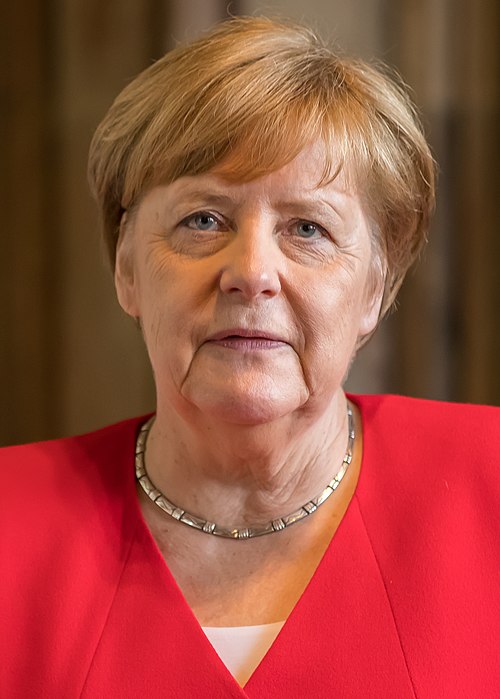
Angela Merkel
Led Germany and Europe through economic crises with fiscal discipline and stability.
Who was Angela Merkel?
Angela Merkel served as Chancellor of Germany from 2005 to 2021, guiding the country through financial crises with fiscal conservatism. Her economic policies emphasized budget surpluses and a strong export orientation, making Germany a eurozone anchor.
“We live in times where we are increasingly interdependent, and that means working together to build a common future.”
— Angela Merkel, G20 Summit, Hamburg, 2017.
Angela Merkel served as Germany's Chancellor for 16 years, from 2005 to 2021, overseeing the continent's largest economy through multiple global and European financial crises. Her governance was characterized by a commitment to fiscal discipline, aiming for balanced budgets and reducing public debt. Germany achieved budget surpluses for six consecutive years from 2014 to 2019, a fiscal record among major European economies during that period.
During the Eurozone sovereign debt crisis (beginning in 2009), Merkel advocated for austerity measures and structural reforms in struggling member states, often facing criticism for their social impact. She insisted on strict adherence to European Union fiscal rules, such as the Stability and Growth Pact, which limits budget deficits to 3% of GDP. Her government provided significant contributions to bailout packages for countries like Greece, requiring stringent economic conditions in return.
Merkel's administration also promoted Germany's export-oriented economy, maintaining its global competitiveness, particularly in manufacturing. Under her chancellorship, Germany consistently ran substantial current account surpluses, reaching a record €293 billion in 2016. Domestically, she initiated the "Energiewende" (energy transition) policy, committing Germany to phasing out nuclear power by 2022 and investing heavily in renewable energy, redirecting significant public and private capital towards green technologies. This long-term industrial shift had substantial economic costs and benefits.
Key Contributions
- Guided Germany to achieve budget surpluses for six consecutive years from 2014 to 2019.
- Insisted on fiscal discipline and structural reforms within the Eurozone during the sovereign debt crisis from 2009.
- Maintained Germany's export competitiveness, resulting in a record current account surplus of €293 billion in 2016.
- Implemented the "Energiewende," committing Germany to phase out nuclear power by 2022 and invest in renewables.
Economic Context
Over Angela Merkel's extensive period of influence, Germany witnessed remarkable economic ascendance, transforming from a rebuilding nation into an export titan. Its GDP per capita soared from $1,162 in 1960 to an impressive $56,103 by 2024, underpinned by a dramatic shift in trade balance from a 1970 deficit to a $177 billion surplus.
Legacy
Merkel's fiscal conservatism and focus on export strength cemented Germany's role as the economic engine of Europe. Her crisis management policies shaped the Eurozone's response to financial instability, while her energy transition initiatives set long-term industrial policy.