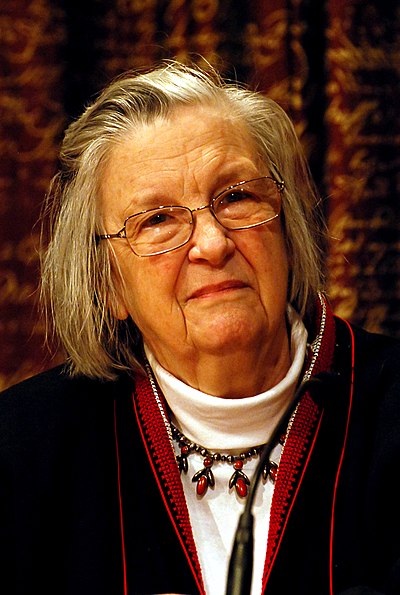
Elinor Ostrom
Demonstrated how communities can successfully manage common resources without privatization or state control.
Who was Elinor Ostrom?
Elinor Ostrom, the first woman to win the Nobel Memorial Prize in Economic Sciences (2009), challenged conventional wisdom regarding common-pool resource management. Her research showed that local communities often develop effective, self-governing institutions to manage shared resources, contradicting the 'tragedy of the commons' hypothesis.
“There is no single solution to managing common-pool resources.”
— Elinor Ostrom, Nobel Lecture (2009)
Elinor Ostrom's work fundamentally reshaped the understanding of how common-pool resources (CPRs) can be governed. Contrary to the prevailing views that CPRs would inevitably be overexploited without either privatization or top-down state control (the 'tragedy of the commons'), Ostrom, in her 1990 book *Governing the Commons: The Evolution of Institutions for Collective Action*, presented empirical evidence of successful, self-organized local solutions globally. Her research analyzed hundreds of cases, from ancient irrigation systems in Spain, some operational for over 500 years, to Swiss alpine meadows.
Her analysis identified eight core design principles crucial for successful self-governance of CPRs, including clearly defined boundaries, rules matching local conditions, collective choice arrangements, monitoring, graduated sanctions, conflict resolution mechanisms, and recognized rights to organize. This institutional approach provided a framework for policymakers and communities seeking sustainable resource management, demonstrating that human cooperation and local knowledge could prevent resource degradation more effectively than universal mandates.
Ostrom's research showed that local communities could achieve efficient and equitable outcomes in resource management, often at lower transaction costs than centralized solutions. For example, some irrigation systems she studied in Nepal managed water distribution with significantly less waste and higher equity than state-managed alternatives. Her work expanded institutional economics and political economy, influencing policies related to fisheries, forests, and water management in numerous countries and highlighting the importance of local autonomy and adaptive governance.
Key Contributions
- Challenged the 'tragedy of the commons' hypothesis with empirical evidence of successful self-governance of common-pool resources in her 1990 book, *Governing the Commons*.
- Identified eight design principles for robust common-pool resource institutions, derived from analyzing hundreds of cases including ancient Spanish irrigation systems.
- Demonstrated that local, self-organized communities could manage resources more efficiently and equitably, with lower transaction costs, than many centralized or privatized schemes.
- Awarded the Nobel Memorial Prize in Economic Sciences in 2009 for her work on economic governance, especially of the commons.
Economic Context
From 1960 to 2012, the United States economy underwent profound growth, with its GDP expanding from $542 billion to over $16 trillion and GDP per capita rising to $51,708. While inflation remained modest at 2.07% by 2012, this period also saw the nation's trade balance swing from a $3.95 billion surplus in 1970 to a significant $551.6 billion deficit.
Legacy
Ostrom's research provided a robust framework for understanding decentralized resource governance, offering practical alternatives to top-down control or privatization. Her insights have reshaped environmental policy and institutional design, emphasizing community-based solutions for sustainable economic development.