Economics Figures

Juan Perón
Championed populist economic policies, nationalization, and worker empowerment in Argentina.

J. Robert Oppenheimer
Physicist who led the Manhattan Project, initiating the nuclear age.

Francois Quesnay
Founder of Physiocracy, argued agriculture was the sole source of wealth.

Adam Smith
Father of modern economics; articulated market self-regulation and free trade.

Thomas Malthus
Argued population grows geometrically while food supply increases arithmetically.

Jean-Baptiste Say
French economist formulating Say's Law and emphasizing entrepreneurship's role in production.

David Ricardo
Systematized classical economics; formulated comparative advantage and iron law of wages.

Friedrich List
Advocated industrial protectionism for national economic strength and German unification.

John Stuart Mill
Champion of liberty; integrated economics with ethics and social reform.

Karl Marx
Critic of capitalism; theorized class struggle and historical materialism.

Alfred Marshall
Synthesizer of neoclassical economics; formalized supply and demand.

Thorstein Veblen
Institutionalist economist critiquing conspicuous consumption and the leisure class's economic role.

Irving Fisher
Developed monetary theory, linking money supply to prices and advocating stable currency.

Rosa Luxemburg
Marxist theorist and revolutionary; critiqued capitalism's imperialist expansion and reformism.

Ludwig von Mises
Championed free markets, criticizing socialism for its inherent economic calculation problem.

John Maynard Keynes
Architect of modern macroeconomics; advocated government intervention to stabilize economies.

Joseph Schumpeter
Theorized creative destruction; emphasized innovation and entrepreneurship in economic growth.

Gunnar Myrdal
Swedish economist analyzing cumulative causation and institutional factors in development.

Friedrich Hayek
Advocate for free markets; warned against central planning and state control.

Raul Prebisch
Developed dependency theory, advocating import-substitution industrialization for developing nations.

Joan Robinson
Criticized neoclassical economics, developed imperfect competition theory and capital theory.
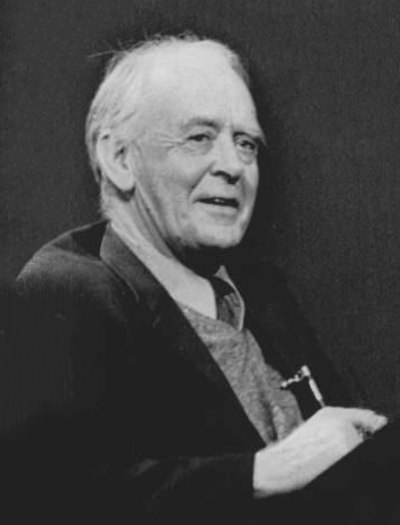
John Hicks
Synthesized economic theory, famous for the IS-LM model and general equilibrium.

John Kenneth Galbraith
Critiqued corporate power and the 'affluent society,' advocating for public sector investment.

Milton Friedman
Leading monetarist; advocated free markets and limited government.

Paul Samuelson
Modernized economics; synthesized diverse theories into a unified framework.
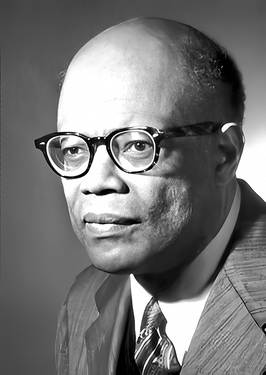
W. Arthur Lewis
Developed the dual-sector model of economic development for labor-surplus economies.

Hyman Minsky
Financial economist known for his hypothesis of inherent instability in capitalist economies.

Kenneth Arrow
Developed social choice theory, general equilibrium, and established impossibility theorem.

Robert Solow
Developed neoclassical growth model, emphasizing technology and capital in economic expansion.

Alan Greenspan
Long-serving Fed Chair, influenced monetary policy through economic booms and busts.

Paul Volcker
Imposed severe monetary policy to conquer crippling inflation in the US.

John Nash
Developed Nash Equilibrium, revolutionizing economic understanding of strategic interactions.

Gary Becker
Applied economic rationality to explain human capital and social behaviors.

Amartya Sen
Pioneered welfare economics, linking poverty, famine, and development to individual capabilities.
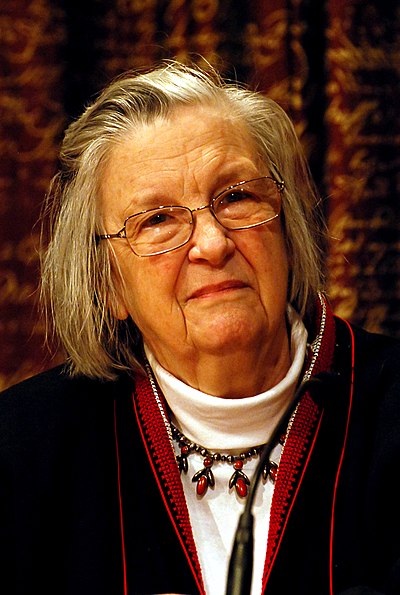
Elinor Ostrom
Demonstrated how communities can successfully manage common resources without privatization or state control.
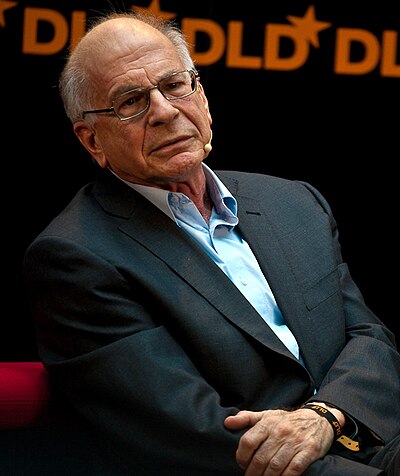
Daniel Kahneman
Integrated psychology and economics to explain irrational decision-making.

Muhammad Yunus
Pioneered microfinance and founded Grameen Bank to alleviate poverty.

Hernando de Soto
Linked poverty to informal property rights, advocating for formalizing 'dead capital.'

Joseph Stiglitz
Analyzed asymmetric information and critiqued market fundamentalism, influencing development economics.

Janet Yellen
First female Fed Chair and Treasury Secretary, focused on full employment and stable prices.

Ben Bernanke
Fed Chair who innovated monetary policy during the 2008 financial crisis.

Nassim Nicholas Taleb
Scholar of uncertainty and risk, known for 'Black Swan' theory and 'Antifragility.'

Ha-Joon Chang
Challenges free-market orthodoxy, advocating strategic industrial policy for development.

Daron Acemoglu
Linked long-run economic growth to inclusive political and economic institutions.

Dambisa Moyo
Economist challenging conventional foreign aid and advocating market-driven development for Africa.

Thomas Piketty
Documented rising wealth inequality and proposed global capital taxation.

Esther Duflo
Pioneered Randomized Controlled Trials for effective poverty alleviation and development policy.