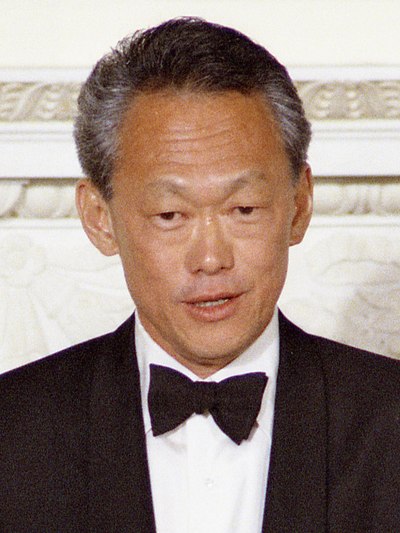
Lee Kuan Yew
Architect of Singapore's rapid economic ascent through disciplined state capitalism.
Who was Lee Kuan Yew?
Lee Kuan Yew guided Singapore from a British colony to a sovereign nation, overseeing its transformation into a high-income global hub. His authoritarian approach to governance enabled swift economic development and social restructuring.
“Even from my sickbed, even if you are going to lower me into the grave and I feel that something is going wrong, I will get up.”
— Lee Kuan Yew, The Singapore Story: Memoirs of Lee Kuan Yew (2000)
Lee Kuan Yew served as Singapore's first Prime Minister for 31 years, from 1959 to 1990. After Singapore's unexpected separation from Malaysia in 1965, the nascent nation faced significant economic challenges, including a lack of natural resources, high unemployment, and ethnic divisions.
Under Lee's leadership, Singapore pursued an export-oriented industrialization strategy, actively attracting foreign direct investment (FDI) through tax incentives and stable governance. The Economic Development Board (EDB), established in 1961, played a central role in industrial planning and investment promotion, helping to secure over $1 billion in FDI by 1970. This approach facilitated the rapid growth of manufacturing and services sectors.
His government implemented comprehensive social engineering policies, prioritizing education, public housing, and healthcare. The Housing Development Board (HDB) provided affordable public housing, accommodating over 80% of the population by the 1990s. Anti-corruption measures and a meritocratic civil service were also crucial for maintaining an efficient state apparatus.
These policies propelled Singapore's economy to consistently high growth rates. GDP per capita soared from approximately US$400 in 1965 to over US$12,000 by 1990, achieving an average annual GDP growth of about 8.5% during his tenure as Prime Minister.
Key Contributions
- Guided Singapore to independence in 1965 and served as its first Prime Minister for 31 years (1959-1990).
- Implemented an export-oriented industrialization strategy, attracting over $1 billion in foreign direct investment by 1970.
- Established the Economic Development Board (EDB) in 1961 to manage industrial planning and foreign investment.
- Developed a comprehensive public housing program through the Housing Development Board (HDB), housing over 80% of the population by 1990.
- Achieved an average annual GDP growth of approximately 8.5% between 1965 and 1990.
Economic Context
During Lee Kuan Yew's extended period of influence, Singapore achieved remarkable economic advancement. Its GDP per capita surged from $428 in 1960 to $55,645 by 2015, while the nation simultaneously transformed its trade balance from a $96 million deficit to an $84 billion surplus, cementing its position as a global trading hub.
Legacy
Lee's policies established a durable economic model centered on state planning, foreign capital attraction, and human capital development. Singapore's sustained prosperity and high living standards remain a direct consequence of the institutions and strategies he implemented from 1965 onwards.