Enlightenment Era Figures
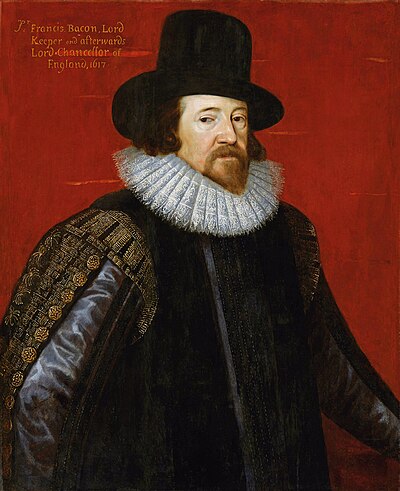
Francis Bacon
Championed empiricism, laying foundations for science-driven economic progress.

Thomas Hobbes
Philosopher advocating absolute sovereignty for social order, a precondition for stable economic activity.

John Locke
Philosopher whose ideas on natural rights and property influenced liberal economic thought.

Isaac Newton
Physicist, mathematician, and Master of the Mint who codified natural laws and stabilized currency.

Montesquieu
Philosopher whose separation of powers theory promoted stable, predictable governance for commerce.

Voltaire
Enlightenment advocate for free speech and free trade, challenging economic protectionism.

Francois Quesnay
Founder of Physiocracy, argued agriculture was the sole source of wealth.

Jean-Jacques Rousseau
Philosopher whose social contract theories influenced ideas on equality and state economic intervention.

Adam Smith
Father of modern economics; articulated market self-regulation and free trade.

Immanuel Kant
Philosopher who shaped ethical foundations for economic conduct and international cooperation.

Thomas Jefferson
Doubled US territory; championed agrarianism and fiscal restraint.

Jeremy Bentham
Founder of utilitarianism, advocating for laws that maximise societal utility.

Horatio Nelson
Secured British maritime dominance, protecting trade and projecting economic power.

Eli Whitney
Inventor of the cotton gin, who transformed Southern agriculture and industry.

Thomas Malthus
Argued population grows geometrically while food supply increases arithmetically.

Jean-Baptiste Say
French economist formulating Say's Law and emphasizing entrepreneurship's role in production.

Napoleon Bonaparte
Centralized French administration and spread liberal legal and economic reforms across Europe.

Georg Wilhelm Friedrich Hegel
Philosopher whose dialectic influenced economic thought on historical development and state's role.

David Ricardo
Systematized classical economics; formulated comparative advantage and iron law of wages.

Carl von Clausewitz
Theorized war's political nature, influencing state resource allocation for conflict.